


Still Sweating Indoors? You Might Be Looking at the Wrong Size Split System
What size split system do I need? It’s one of the most common questions Australians ask before buying an air conditioner, and honestly, it’s the right one to start with. Pick the wrong size, and you’re either shivering in an over-chilled room with a sky-high power bill, or you’re still sweating because the unit can’t keep up. Neither is a good outcome for what is a significant investment.
The good news is that sizing a split system air conditioner isn’t as complicated as it sounds. Once you understand the key factors like room size, ceiling height, insulation quality, and your local climate, you’ll have a clear picture of what you need before you ever speak to an installer. This guide walks you through all of it, so you can make a confident, informed decision.
What Size Split System Do I Need?
Your Room Size Is the Starting Point – Here’s a Quick Answer
The cooling capacity of a split system air conditioner is measured in kilowatts (kW). As a starting point, here’s a general guide based on room size:
| Room Size | Floor Space | Approx. Capacity | Typical Room Example |
| Small | Up to 20m² | 2-2.5kW | Bedroom, study, small kitchen |
| Medium | 20-40m² | 2.5-5kW | Bedroom with ensuite, small lounge room |
| Large | 40-60m² | 4-6kW | Large bedroom, mid-sized lounge room, large kitchen |
| Extra Large | 60m²+ | 5-9kW | Open plan areas, large living spaces |
This table gives you a useful AC size reference, but it’s a rough guide only. Other factors like ceiling height, insulation, window orientation, and your local climate will all affect the right air conditioner size for your specific situation. More on those shortly.
It’s also worth noting that not all air conditioners are created equal. A split system works differently from a portable air conditioner or a ducted cooling system, and the placement of the indoor unit inside a single room will also influence how efficiently it cools the space. Air conditioner capacity needs to be matched to the actual conditions of the room, not just the floor space.
Already Know You Need a Split System Installed?
Skip the research and get a quote from a licensed split system air conditioner installer in Sydney today. See the locations we serve and give us a call today – 0480 808 422
Key Factors That Affect the Size of Your Air Conditioning Unit – Beyond Square Metres
Other Factors That Play a Crucial Role in Sizing Your Air Con
Room size matters, but it’s far from the only crucial factor. Here’s what else you need to consider when working out the right air conditioner size for your home.
Ceiling Height
Most sizing guides assume a standard ceiling height of around 2.4 metres. But if your home has high ceilings at 2.7m or 3m, there’s significantly more air volume to cool, and you’ll need a more powerful air conditioner to compensate. As a rule of thumb:
- 2.4m ceiling: multiply floor space (m²) x 150 watts
- 2.7m ceiling: multiply floor space (m²) x 160 watts
- 3.0m ceiling: multiply floor space (m²) x 175 watts
Divide the result by 1,000 to get your required kW. For example, a 30m² room with a 2.4m ceiling needs roughly 4.5kW of cooling capacity.
Insulation Quality
Ceiling insulation has one of the biggest impacts on your AC size requirements. A well-insulated home retains cool air more effectively and minimises heat loss through the ceiling, meaning the split system doesn’t have to work as hard to keep the room cool. Poor insulation, particularly a flat tin roof with little to no insulation, can significantly increase the required cooling load and make it harder to efficiently cool the space.
If your home isn’t well insulated, it’s worth considering roof insulation before investing in a new air conditioner. It can reduce the required air conditioner capacity and lower running costs over time.
Window Size, Glazing and Sun Exposure
Windows are a major source of heat gain. Research suggests that as much as 87% of a room’s heat can be gained through windows alone, particularly single-glazed windows with no shading or coverings.
Window orientation matters too. North- and west-facing rooms cop direct sunlight during the hottest parts of the day in Australia, which can substantially increase the cooling demand. A shaded, south-facing room will generally need less capacity than an identical room facing west with large, unshaded windows.
If your room has poor window glazing or significant sun exposure, it’s wise to size your air conditioner up by a couple of kilowatts to compensate.
Room Dimensions and Layout
Room width and the overall shape of a space affect air flow. For open plan areas where a lounge room, dining area, and kitchen all flow together, you’ll likely need a larger unit than a straightforward single room of the same total area. This is because warm air from across a larger, open space takes more effort for the indoor unit to process and regulate temperatures effectively.
Cool air from the unit needs to travel further and mix across a less contained space, which places greater demand on the cooling system.
Larger rooms with irregular shapes or multiple connected zones may also need more than one split system to keep every area at a comfortable temperature.
How Your Local Climate Affects the Size of the Air Conditioner You Need?
Room Size Alone Won’t Cut It – Location and Heating and Cooling Needs Both Matter
Australia spans multiple climate zones, and your location has a direct bearing on the right size split system for your home. A split system sized for a Melbourne living room could be genuinely underpowered in Darwin, or unnecessarily large in Hobart.
Here’s a simplified breakdown:
- Hot and humid climates (Darwin, Far North QLD): You’ll need a more powerful air conditioner to deal with both heat and humidity. Size up relative to the standard guide.
- Hot and dry climates (Perth, outback NSW/SA): High temperatures mean your air conditioning system has to work harder. Size up, particularly for cooling.
- Temperate and cooler climates (Melbourne, Hobart, ACT): Standard sizing is often sufficient, and you may even be able to size down slightly.
As a general rule, if your area regularly experiences temperatures above 35°C, experts recommend adding a couple of kilowatts to your calculated cooling capacity, as extreme heat reduces an air conditioner’s efficiency.
This is also where a reverse-cycle air conditioner makes a lot of sense for most Australian homes. A reverse cycle unit can both cool in summer and provide efficient heating in winter, making it a year-round heating and cooling solution. In fact, reverse cycle air conditioning is widely regarded as one of the most energy-efficient ways to heat a home.
Not Sure Which System Suits Your Home?
Browse a wide range of air conditioning systems to find the right fit for your space and budget. Check our services and call us today – 0480 808 422
The Real Cost of Getting the Wrong Size – Running Costs and Energy Bills
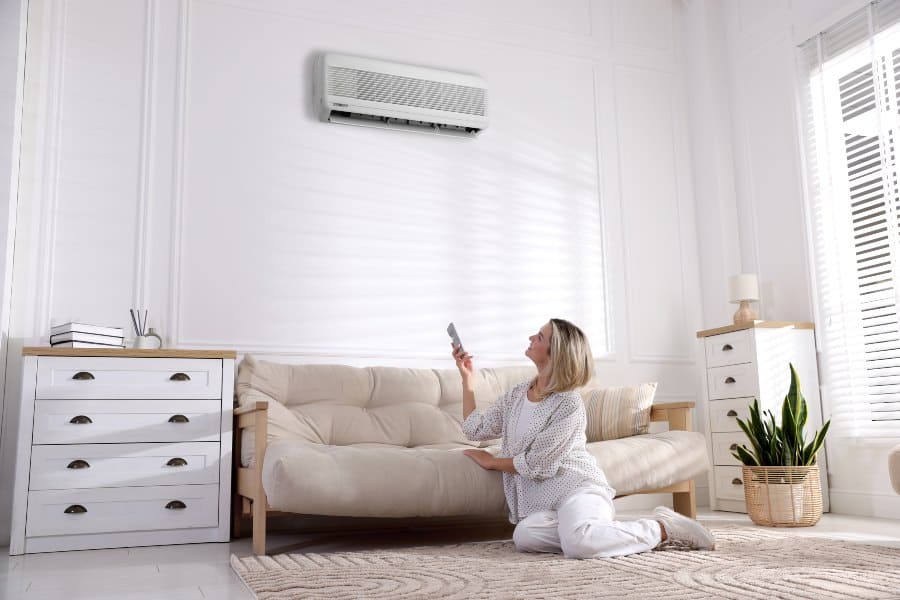
Too Big or Too Small – Both Stop Your Split System From Cooling the Room Properly
One of the most persistent myths about air conditioning is that a bigger unit is always better. In practice, an oversized split system creates just as many problems as an undersized one, often more.
If your air conditioner is too large:
- It short-cycles, turning on and off frequently to reach the target temperature
- The room doesn’t dehumidify properly, so it feels less comfortable even when it’s technically cool
- Energy consumption spikes, driving up energy bills
- The compressor experiences more wear and tear, shortening the unit’s lifespan
If your air conditioner is too small:
- The unit runs at maximum output almost constantly, struggling to cool the room
- It dries out the air excessively
- Energy consumption is still high because the unit never reaches an efficient operating rhythm
- The room may never reach a comfortable temperature on extremely hot days
The sweet spot is a right-sized split system, or one that’s marginally larger than the minimum requirement. For example, if your calculation suggests you need a 6kW unit, a 6-6.5kW model is ideal. A right-sized air conditioner not only keeps the room cool with less effort, but it also protects the unit from unnecessary wear.
You can also use different air conditioning units throughout your home for maximum energy efficiency. Consider a larger unit in the main lounge room and smaller split systems in bedrooms and the study, rather than one unit trying to serve multiple rooms at once.
How to Use an Air Conditioner Size Calculator – Tools, Indoor Unit Placement, and When to Call a Professional
Getting an Accurate AC Size Estimate for Your Space
The Manual Calculation Method
You can get a reasonable estimate of your required cooling load using this simple formula:
- Measure your room’s length x width to get floor space in m²
- Multiply by the appropriate wattage factor for your ceiling height (150W, 160W, or 175W)
- Divide by 1,000 to convert to kW
Example: A 6m x 5m lounge room with a 2.4m ceiling = 30m² x 150 = 4,500W / 1,000 = 4.5kW
Use an Air Conditioner Size Calculator
For a more accurate estimate that accounts for all the variables like window orientation, insulation, and location, the FairAir Cooling Load Calculator from the Australian Institute of Refrigeration, Air Conditioning and Heating (AIRAH) is one of the most reliable independent tools available. It’s free to use and goes well beyond a basic room size calculation.
Online calculators from manufacturers and retailers can also be useful, but be aware that these tend to overestimate the air conditioner capacity you need.
Check the Energy Rating Label
Once you’ve narrowed down your options, pay attention to the energy rating label on each unit. The more stars, the more energy efficient the air conditioner, which directly impacts your running costs and energy bills over the unit’s lifespan. This is an easy way to compare air conditioning units of similar cooling capacity before committing to a purchase.
Inverter Technology
It’s also worth looking for a split system with inverter technology. Unlike fixed-speed air conditioning units, inverter models adjust the compressor speed to match the actual cooling demand of the room, using less energy and maintaining a more consistent, comfortable temperature across larger rooms and single-room spaces alike.
Indoor Unit Placement for a Single Room
The placement of the indoor unit affects how well the split system can regulate temperatures throughout the space. For a single room, position the unit high on a wall away from heat-generating appliances, and never directly above electrical fittings. Cool air sinks naturally, so a well-placed indoor unit will distribute air flow more evenly without creating uncomfortable cold spots directly below the unit.
When to Call a Professional
While manual calculations and online calculators give you a good starting point, a qualified air conditioning specialist can perform a proper heat load calculation that accounts for room dimensions, external walls, roof insulation, window size, local climate, and more. This is the most reliable way to ensure you’re getting the right air conditioner size, and it can genuinely save you money in the long run by avoiding an expensive mis-sized installation.
For those who want to revisit the fundamentals before making a decision, the split-system air conditioner guide is a great place to start.
Keep Your New System Running Like New
Regular air conditioning cleaning keeps your split system efficient, extends its lifespan, and protects your investment long-term. Call us today – 0480 808 422
What Size Split System Do I Need? Stop Guessing and Get It Right the First Time

Sizing a split system air conditioner doesn’t have to be overwhelming. Start with your room size, then factor in ceiling height, insulation quality, window orientation, sun exposure, and your local climate. Use an air conditioner size calculator to get an accurate AC size estimate, and when in doubt, consult a professional for a proper cooling load assessment.
The right-sized air conditioner won’t just keep your home comfortable. It will efficiently cool the space, run more economically, and last longer. Getting it right from day one is always worth it.
Not sure what size split system suits your home? Get in touch with the CB Climate Control team today for an obligation-free assessment.


