


Is the Air Inside Your Building Actually Clean? Here’s What You Need to Know
HEPA filters are used because indoor air can contain particulate pollutants such as dust, mould spores, pollen, bacteria and virus-containing aerosols. VOCs may also be present indoors, but they require complementary gas-phase filtration such as activated carbon or other sorbent media. Australians spend an average of 90% of their time indoors, yet most building managers assume their ventilation is doing enough. It usually isn’t.
DCCEEW cites CSIRO research estimating that poor indoor air quality may cost Australia an estimated $12 billion per year. Originally developed during World War II, HEPA, which stands for High Efficiency Particulate Air, technology has since become the gold standard in commercial, healthcare, and aged care air filtration across the country.
Choosing the right HEPA filter isn’t as simple as grabbing the first one off the shelf. From filter grade and room size to installation integrity and maintenance cycles, every detail affects how clean your building’s air actually becomes. Here are the 8 key factors to keep in mind:
- HEPA Grade and Filtration Standard (H13 vs H14)
- Particle Types Your Building Needs to Target
- Room Size and Air Change Rate Requirements
- True HEPA vs “HEPA-Type”: Avoiding False Labelling
- In-Situ Testing and Seal Integrity
- Complementary Filtration (Activated Carbon and Pre-Filters)
- Maintenance Schedule and Filter Replacement Cycles
- Certification, Brand Credibility and Australian Compliance Standards
Why HEPA Air Filtration Is No Longer Optional for Commercial Buildings
The Hidden Indoor Air Pollution Crisis Most Building Managers Overlook
Indoor air quality doesn’t look like a problem until it is one. Here’s why commercial buildings across Australia can no longer afford to ignore it:
- Invisible threats are everywhere. Cooking fumes, VOCs from cleaning products and carpets, mould spores, pet dander, and airborne pathogens from an ill employee circulate through commercial spaces every single day.
- Indoor air is often more polluted than outdoor air. The Australian Centre for Disease Control states that indoor air can have much higher concentrations of some pollutants than outdoor air, including pollutants from VOC-emitting materials, particulate matter, microorganisms such as viruses, bacteria and fungi, and gases such as nitrogen dioxide.
- Occupant expectations have shifted. Post-pandemic, building occupants expect clean air as a baseline, not a luxury. It directly affects health, comfort, and productivity.
- The evidence is clear. CSIRO research found that air purifiers fitted with HEPA filters reduced indoor particle concentrations by 30–74% during smoke episodes from prescribed burns, providing real results in real Australian conditions.
At CB Climate Control, we work with building managers across Australia to assess their specific air quality challenges and design HEPA filtration systems that actually address them, not just tick a box.
Your Building’s Air Quality Starts With the Right System
Already know you need an upgrade? Explore our range of air conditioning systems designed for commercial buildings across Australia. Contact us for commercial air conditioning service today – 0480 808 422
What Exactly Is a HEPA Air Filter and How Does HEPA Filtration Work?
Breaking Down the Science Behind That 99.97% Particle Capture Promise
Understanding how HEPA filtration works is the first step toward choosing the right system for your building.
HEPA filters are typically constructed from glass fibre or PTFE materials, arranged in a dense, randomly layered matrix that forces air through an intricate maze of filter fibres. As air passes through this structure, three distinct mechanisms work simultaneously to trap airborne particles:
- Impaction: Larger particles moving in a straight air stream collide directly with filter fibres and become trapped, much like insects caught in a net.
- Interception: Mid-sized particles follow the airflow but pass close enough to filter fibres to get caught as air passes around them.
- Diffusion: Ultrafine particles and microscopic particles smaller than 0.3 microns move erratically due to Brownian motion, bouncing off gas molecules and colliding unpredictably with filter fibres until they’re trapped.
HEPA performance depends on the standard being used. The older/common US definition refers to at least 99.97% efficiency at 0.3 microns. EN 1822/ISO 29463 classifications instead test filters at the most penetrating particle size, with H13 corresponding to at least 99.95% overall efficiency and H14 to at least 99.995%
It’s worth noting that the filter’s performance depends as much on airtight installation as it does on the filter itself. A perfectly rated HEPA filter that leaks around its seal can allow contaminated air to bypass it entirely, making proper installation non-negotiable.
8 Factors To Consider When Choosing the Right HEPA Filters for Your Building
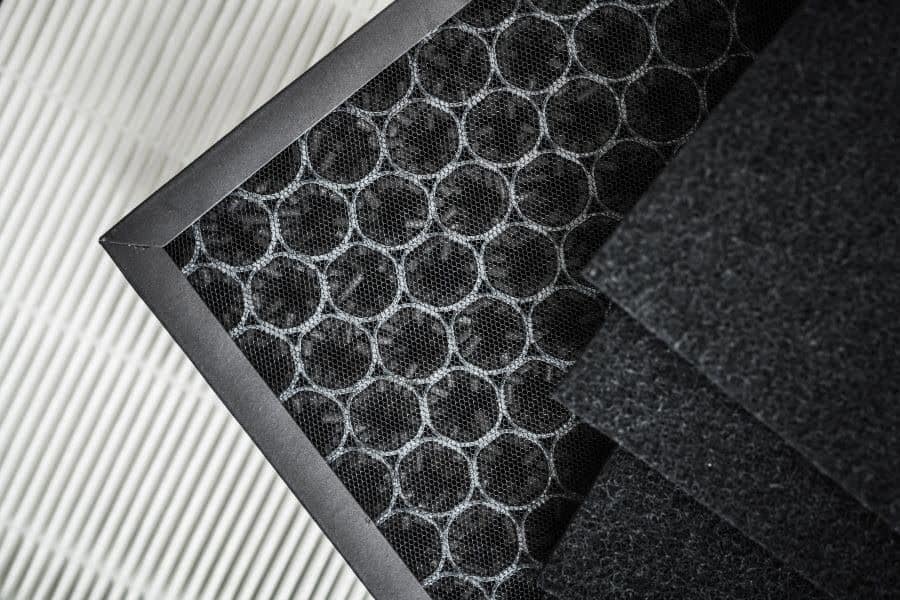
1. HEPA Grade and Filtration Standard: H13, H14, or ULPA?
Filtration efficiency is graded, and matching the right grade to your building type is essential.
- H13 HEPA filters are the gold standard for most commercial, medical, and residential environments in Australia, offering superior particle capture for everyday airborne contaminants.
- H14 filters deliver an even higher level of protection, making them the preferred choice for pharmaceutical cleanrooms, hospital operating theatres, and intensive care units.
- ULPA (Ultra Low Penetration Air) filters are reserved for the most demanding environments, including semiconductor manufacturing, biohazard containment, and specialist research facilities.
The MERV rating system is a scale from 1 to 20 that measures how effectively a filter captures airborne particles. True HEPA filters typically fall between MERV 17 and MERV 20, well above the standard commercial air filters that most buildings use by default.
Over-specifying wastes the budget. Under-specifying puts people at risk. A professional assessment from CB Climate Control will identify the appropriate grade for your building’s specific occupancy, use case, and compliance requirements before you spend a cent.
2. Targeting the Airborne Particles and Pollutants Your Building Actually Faces
No two buildings share the same air quality profile. Before selecting any air filtration system, it’s critical to understand what airborne contaminants your space is actually dealing with.
- Medical and aged care facilities may require higher-efficiency filtration, including HEPA systems in higher-risk areas, but the required filter class should be determined by the room use, risk assessment and applicable healthcare or facility standards.
- Commercial offices typically need to manage fine dust, pollen, allergens, and VOCs off-gassed from furniture, carpets, and cleaning products.
- Food service and hospitality venues deal with smoke, cooking odours, and fine particulate matter that can compromise both air quality and occupant comfort.
- Buildings near construction zones face high loads of coarse and fine dust particles that accelerate filter clogging and demand more robust pre-filter setups.
HEPA filters excel at capturing solid airborne pollutants: dust mites, mould spores, pollen, pet dander, bacteria, and fine particulate matter. However, they are not designed to address gases and odours. Volatile organic compounds, formaldehyde, and NO2 require complementary technologies, which we cover in Factor 6.
3. Room Size, Airflow, and Air Changes Per Hour: Matching Capacity to Space
Even a best-in-class HEPA air purifier is ineffective if it’s the wrong AC size for the space it’s serving. A unit that’s too small simply won’t cycle the room’s air frequently enough to make a meaningful difference to indoor air quality.
The key metric here is Air Changes Per Hour (ACH), which measures how many times the full volume of air in a room is filtered within one hour. Required airflow or equivalent air changes vary by building type, room use and applicable standard. For portable air cleaners, use CADR matched to room size; for healthcare spaces, refer to relevant healthcare ventilation standards rather than applying one generic ACH target.
To calculate the right unit capacity:
- Measure your room dimensions (length x width x height = cubic metres)
- Multiply by your target ACH
- Match to a HEPA air purifier or filtration system with the equivalent airflow rating (m³/hr)
For large commercial floors, warehouse spaces, or multi-zone buildings, a single unit is rarely sufficient. CB Climate Control can design centralised HVAC systems with integrated HEPA filtration, or multi-unit configurations that ensure clean air reaches every corner of your building.
4. True HEPA vs “HEPA-Type” Air Filters: Don’t Fall for the Marketing Trap
This is where many building managers get caught out, and it’s too important to gloss over.
Walk through any hardware store or browse online, and you’ll find products labelled “HEPA-type,” “HEPA-like,” or “HEPA-style.” These are not standardised certification terms. Performance can vary significantly, so buyers should verify the stated efficiency, test method and certification rather than relying on the label alone.
A filter either meets a recognised HEPA/ULPA performance standard and test method, or it should be treated as non-HEPA for specification purposes.
Recognised standards and practices such as IEST-RP-CC001 and UL 586 set out performance and testing requirements for HEPA/ULPA filters. Buyers should request manufacturer test certificates or third-party test documentation.
In environments like aged care facilities, childcare centres, or medical practices, using a non-certified filter is not just a performance compromise. It’s a compliance and duty-of-care risk. Always verify that any filter you purchase is certified true HEPA, and source it from an authorised Australian supplier.
5. In-Situ Testing and Seal Integrity: The Detail That Determines Real-World Performance
A HEPA filter that performs perfectly in a lab can fail in the field, and building managers rarely find out until it’s too late.
The most common failure point isn’t the filter itself. It’s the installation. Even a small gap in the filter housing, a damaged gasket, or an improperly seated frame creates a bypass channel that allows contaminated air to circumvent the filter entirely. The National Air Filtration Association (NAFA) states clearly that a HEPA filter is only as good as its gasketing and framing when installed.
This is why in-situ testing, which involves testing the filter as installed in its housing rather than in a controlled lab setting, is critical for any building where air quality matters. In-situ testing uses aerosol-challenge methods to detect pinhole leaks, seal failures, and ductwork gaps that could compromise the filter’s performance.
For cleanrooms, controlled environments and other critical applications, on-site HEPA integrity testing is commonly required at commissioning, after replacement or maintenance, and at least annually or as required by the relevant regulatory authority.
When Was Your System Last Professionally Inspected?
A dirty or poorly maintained system undermines even the best HEPA filter. Our air conditioning cleaning service ensures your setup performs exactly as it should. Contact us now – 0480 808 422
6. Complementary Air Filtration: When HEPA Alone Isn’t Enough
HEPA filtration is extraordinarily effective at capturing particles, but it has a well-documented limitation: it cannot capture gases, odours, or volatile organic compounds. Molecules responsible for VOCs, cooking odours, formaldehyde, and NO2 are simply too small to be trapped by mechanical filtration.
For buildings where these pollutants are a concern, a layered filtration strategy is essential:
- Pre-filters capture larger particles such as dust, hair, and debris before they reach the main HEPA element. This significantly extends the HEPA filter’s lifespan and helps maintain optimal airflow with reduced airflow resistance over time.
- Activated carbon filters work through adsorption. Gas molecules bond to the microscopic pores on the carbon surface, removing odours and VOCs from the air stream. Activated carbon is the go-to solution for cooking odours, chemical fumes, and general indoor air pollution.
- For formaldehyde or VOC-heavy environments, consider technologies specifically designed for gases, such as substantial activated carbon or other sorbent media. Any catalytic oxidation technology should be selected only where independent performance data support its effectiveness for the target gas.
The right combination depends on your building’s specific pollutant profile. CB Climate Control will assess your environment and design a layered filtration solution that addresses every threat, not just the ones you can see.
7. HEPA Filter Maintenance: Replacement Cycles, Pre-Filter Care, and What Never to Do
Even the finest medical-grade HEPA filters become ineffective, and potentially counterproductive, when maintenance is neglected. A clogged filter doesn’t just stop working; it can restrict airflow, strain your HVAC systems, and increase energy costs.
Here’s the standard maintenance framework for commercial HEPA systems:
| Action | Frequency |
| Inspect seals and housing | Monthly |
| Clean or replace the pre-filter | Every 3 to 4 months |
| Replace the HEPA filter | Every 6 to 12 months |
Do not wash or vacuum a HEPA filter unless the manufacturer explicitly states it is washable or cleanable. Washing or vacuuming a non-cleanable HEPA filter can damage the fibre matrix and reduce performance.
Most quality HEPA air purifiers include built-in indicators to alert users when replacement is due. For commercial buildings with multiple units, CB Climate Control offers scheduled maintenance programmes that take the guesswork out of filter management, ensuring your system is always operating at certified performance levels.
8. Australian Certification Standards and Brand Credibility: Non-Negotiable for Compliance
Not all HEPA filters sold in Australia meet Australian or ISO healthcare compliance standards. In regulated environments such as medical centres, aged care facilities, childcare centres, and pharmaceutical labs, standard commercial filters frequently fall short of the compliance threshold.
When evaluating filters for your building, look for:
- H13 or higher classification where required by the application, risk assessment, project specification or relevant standard.
- EN 1822 or ISO 29463 classification/test documentation where HEPA/ULPA performance is required.
- For regulated or high-risk environments, look for recognised standards and documentation such as EN 1822, ISO 29463, ISO 14644, where applicable, AS 1807 in-situ integrity testing, NATA-accredited test reports, and manufacturer test certificates.
- IEST-RP-CC001, UL 586 or equivalent documentation, where relevant, supported by manufacturer test certificates or third-party test reports.
- AHAM and CADR ratings for air purifier systems, which independently validate real-world performance
Equally important is sourcing filters from credible, established brands and authorised Australian distributors. Avoid suspiciously low-priced alternatives from unverified sellers, as the performance difference is rarely worth the savings.
CB Climate Control sources and installs only certified, compliant HEPA filtration solutions, giving you confidence that your building meets its obligations and your occupants are genuinely protected.
Ready to Upgrade to a Cleaner & Smarter System?
If your current setup can’t support proper HEPA filtration, it may be time for a fresh install. Explore our split system air conditioner installation and air conditioning installation services to find the right fit for your space. Check if we service your area and get in touch today – 0480 808 422
Breathe Easy and Choose the Right HEPA Filter for Your Building
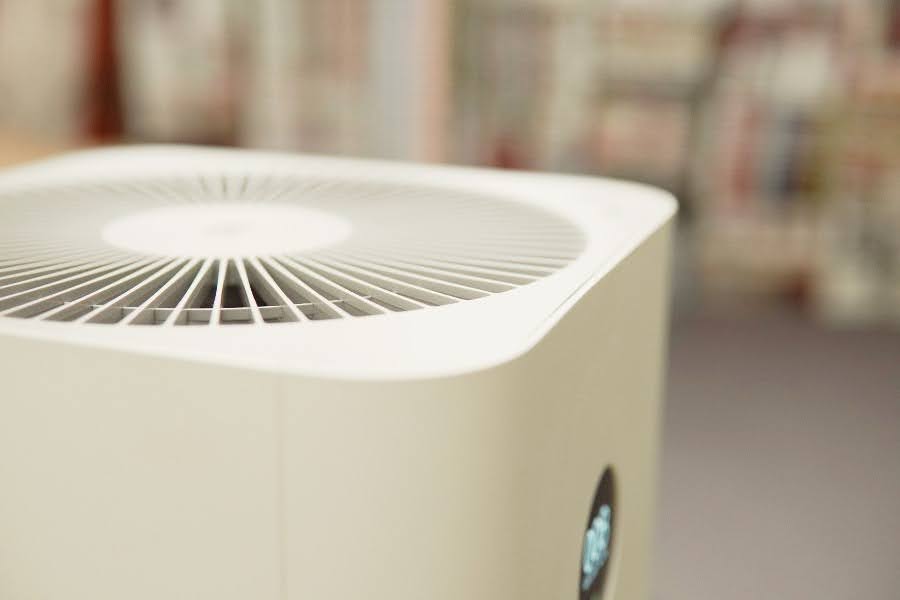
Clean indoor air isn’t just a comfort issue. It’s a health issue, a compliance issue, and increasingly, a business issue.
Choosing the right HEPA filter for your building means matching grade and filtration efficiency to your environment, sizing the system to your room volumes and ACH requirements, targeting the specific airborne contaminants your occupants face, layering complementary filtration where HEPA alone isn’t sufficient, and maintaining the system to certified operating conditions over its full lifespan.
Get any one of those factors wrong, whether it’s a fake HEPA label, a poorly sealed installation, or a maintenance schedule that’s been quietly ignored, and you’re not actually protecting the people in your building. You’re just spending money on the appearance of clean air.
CB Climate Control has the expertise, the certified products, and the installation experience to design, install, and maintain HEPA filtration systems that genuinely work, for commercial offices, medical facilities, aged care centres, hospitality venues, and everything in between.
Ready to find out what the air in your building is really doing? Contact CB Climate Control today for a confidential consultation and tailored quote.


