

Understanding Your Air Con Investment Before You Buy
If you’re wondering “how much does it cost to install air conditioning?”, it can be a major investment, but it’s often essential for comfort in the Australian climate. Whether it’s a single-room split system or a full ducted setup, costs vary widely depending on the type of system, home layout, and installation complexity.
Most residential air conditioning installations in Australia cost somewhere between about $600 and $25,000 including equipment and standard installation, depending on system type, home size, and installation complexity. Many common split-system installs fall between roughly $1,500 and $6,000.
Those planning new installations benefit from understanding the drivers of these costs. System choice, labour rates, electrical work, and energy efficiency ratings all influence the final price. Knowing these factors helps manage budgets and ensures the system delivers value over time.
Disclaimer: All pricing and information in this guide are general estimates based on typical Australian air conditioning installation costs and publicly available industry data. Actual prices, running costs and rebate eligibility vary depending on your location, property characteristics, installer, and current government programs. Always obtain detailed quotes from licensed professionals before making any purchase or installation decisions – 0480 808 422
How Much Does It Cost to Get Air Conditioning Installed?
Air conditioner installation costs vary by system type, home size, and installation complexity. Pricing typically reflects the equipment cost, labour charges, and any additional work such as electrical upgrades or duct modifications.
Typical Price Ranges for Air Conditioning Installation
The average cost of air conditioning installation in Australia generally starts around $600 for small split systems and can reach $12,000 or more for ducted or multi-zone systems. A single split system installation often costs between $600 and $5,500, depending on capacity and brand.
Ducted systems are more expensive due to the network of ducts and vents required. Homeowners usually pay between $6,000 and $12,000, though larger properties or complex layouts may increase the total. In comparison, portable or window units seldom require professional installation, making them a low-cost option.
When planning to install an air conditioner, many Australians allocate funds for both equipment and installation. A simple wall-mounted split-system air conditioner may include a standard back-to-back installation with minimal structural changes. Larger or more advanced systems typically add to the overall expense.
| System Type | Typical Installation Cost (AUD) |
| Split System Air Conditioner | $600 – $5,500 |
| Multi-Head Split System Air Conditioner | $2,500 – $7,000 |
| Ducted Air Conditioning System | $6,000 – $12,000+ |
Book a Professional Clean Today to Prevent Air Con Problems Tomorrow
Breathe easier with professional air conditioning cleaning that removes built-up dust, mould and bacteria, improves airflow efficiency, protects your system, and keeps your family comfortable all year. Book now – 0480 808 422
Comparing Installation Labour Costs per City (Standard Back-To-Back Split)
Below are current, city-by-city installation cost benchmarks for a standard split-system (wall-mounted) “back-to-back” install. These are labour-only averages (consistent across brands/sizes for a typical small room job) for a small unit (~2.5–3.5 kW).
| City | Range (AUD) | Avg (≈) |
| Sydney | $617–$822 | $720 |
| Melbourne | $580–$773 | $675 |
| Brisbane | $555–$740 | $650 |
| Perth | $524–$699 | $610 |
| Adelaide | $494–$658 | $575 |
| Canberra | $475–$633 | $555 |
| Hobart | $463–$616 | $540 |
Here are clear “all-in” indicative totals (unit + standard back-to-back install) for a small bedroom split (≈2.5–2.6 kW) in each city:
| City | Indicative total (AUD) |
| Sydney | $1,799 |
| Melbourne | $2,610 |
| Brisbane | $1,914 |
| Perth | $1,865 |
| Adelaide | $1,580 |
| Canberra | $1,798 |
| Hobart | $1,798 |
Labour Costs and What They Cover
Labour costs generally represent a significant portion of the total new air conditioning system installation cost. Licensed installers in Australia often charge between $80 and $150 per hour, depending on the region and the complexity of the work.
Labour typically covers mounting indoor and outdoor units, connecting refrigerant lines, electrical wiring, and basic testing. Installers also ensure compliance with Australian safety standards and manufacturer requirements. Additional labour charges may apply for removing old equipment, installing new circuits, or drilling through brick walls.
The final labour figure can range from $300 to $800 for split systems and up to $3,000 or more for large ducted setups. Factors such as roof access, home design, and distance between units all influence the final labour component.
How Installation Complexity Impacts Pricing
Installation complexity significantly affects overall air conditioner installation costs. Jobs that require structural alterations, complex electrical work, or longer refrigerant line runs tend to cost more.
A ground-level single-storey home offers easier access, usually keeping labour efficient and affordable. In contrast, double-storey homes or apartments often require additional materials, scaffolding, or coordination with building management. These factors increase both time and cost.
System choice also shapes complexity. Ducted systems involve ceiling or underfloor ductwork, insulation, and zoning, all of which add installation hours. Split systems installed in tight spaces or far from the outdoor unit require longer pipework and drainage solutions.
Installers often include a site inspection to assess complexity before providing a final quote. Accurate assessment helps prevent unexpected costs during installation and ensures that the system meets performance and safety standards.
Air Conditioning Systems Installation Costs
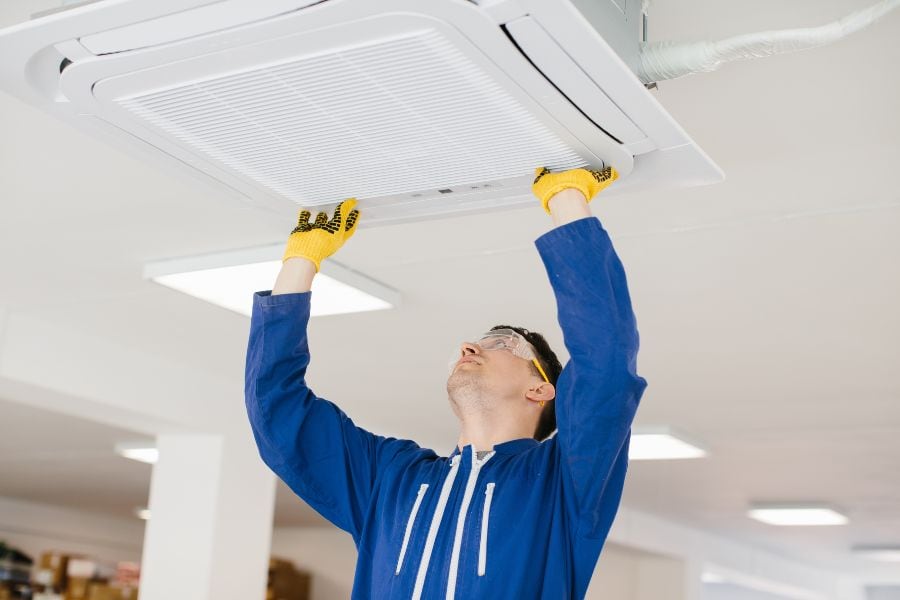
New air conditioner installation cost in Australia varies mainly by system type, home layout, and installation difficulty. Smaller split systems usually cost far less than ducted air conditioning, while multi-split and other setups sit in between, depending on the number of indoor units and complexity.
Split System Air Conditioner Installation Price
A split system air conditioning system is the most common residential option in Australia due to its affordability and efficiency. It includes an indoor wall unit and an outdoor compressor connected by refrigerant piping.
Typical installation costs range from $600 to $3,000, depending on capacity, pipe length, wall material, and power supply access. A basic single-room unit for a small apartment is generally the cheapest to install. If wiring or wall penetration requires additional work, prices rise accordingly.
Homeowners in warmer regions often choose reverse-cycle split systems that provide both heating and cooling. While the unit itself adds to the upfront price, the all-season function improves value for money. Professional installation remains essential to comply with Australian safety and refrigerant handling standards.
| Split System Type | Average Install Cost (AUD) | Suitable For |
| Single head unit | $600–$1,500 | 1–2 rooms |
| Larger capacity / complex install | $1,500–$3,000 | Larger rooms or apartments |
Ducted Air Conditioning Installation Cost
Ducted air conditioning offers whole-home temperature control using vents connected to a central unit concealed in the ceiling or under the floor. It suits medium to large houses and newly built properties where duct routing can be planned early.
Installation costs are significantly higher, typically between $6,000 and $25,000+. The range reflects differences in house size, ducting design, brand choice, and zoning features. Multi-zone temperature control and high-efficiency systems add convenience but also increase labour and material costs.
Because ducted systems require substantial modification to the property, licensed installers often conduct site inspections to produce accurate quotes. For existing homes, retrofitting adds complexity, making professional planning vital to manage airflow and energy use efficiently.
Multi-Split and Other Air Conditioning Units
Multi-split systems connect multiple indoor units to one outdoor compressor, ideal for homes without roof space for ducting. Costs usually run from $2,500 to $10,000, depending on the number of rooms and the total cooling capacity required.
Each indoor unit operates independently, offering flexibility in temperature control but adding extra pipework and installation time. This makes the per-room cost higher than a basic split system but lower than a new ducted installation.
Other types include window-box and portable air conditioners, which require minimal installation. Window units can cost around $500–$1,000 to fit, while portable aircons generally need only a power outlet and window exhaust. These options suit renters or temporary cooling needs where permanent modifications are not possible.
Key Factors That Affect Air Conditioning Installation Costs
The cost to install air conditioning depends on several technical and site-specific factors, such as property size, the system’s cooling capacity, and the chosen brand. Installation complexity and the level of energy efficiency also influence the total price paid by the homeowner.
Size and Layout of the Home
A building’s layout directly affects the scope of work required for air conditioning installation. Larger homes or multi-storey properties often need more indoor units, longer ductwork, and additional electrical connections. Smaller or open-plan spaces usually require fewer components and less labour.
Installers evaluate access points, ceiling heights, and wall construction to determine the installation method. Homes with difficult roof cavities or limited internal space increase installation time and cost. In contrast, a single-storey brick home with easy ceiling access typically results in a lower overall price.
Typical considerations include:
| Factor | Impact on Cost |
| Number of rooms | More rooms may require multiple units |
| Ceiling type | High or vaulted ceilings reduce cooling efficiency |
| Accessibility | Limited roof or wall space increases labour costs |
Good design planning ensures adequate airflow and energy efficiency without overspending on equipment or labour.
System Capacity and Room Requirements
The required system capacity, measured in kilowatts (kW), must match the size and use of each room. A small bedroom might only need a 2.5 kW split system, while a large living area could require 7 kW or more. Selecting the correct size prevents wasted energy and limits future maintenance issues.
Oversized units frequently have short cycles, leading to higher electricity consumption. Undersized systems run continuously, producing uneven temperatures and added wear on components. Installers use heat load calculations that consider insulation, window size, and building orientation before recommending a unit.
Many energy-efficient air conditioners now use inverter technology to regulate output and reduce electricity use. Investing in a properly sized and efficient system can offset higher upfront costs through lower long-term energy bills.
Brand and Model Selection
Different air conditioner brands and models vary in price, performance, and warranty coverage. Well-known brands such as Daikin, Fujitsu, and Panasonic generally offer reliable performance, extensive service networks, and advanced efficiency features. However, these systems often cost more to purchase and install.
Less premium brands can reduce upfront expenses but may lack advanced energy-saving functions or robust after-sales support. Choosing a high-efficiency model may add to the initial investment yet deliver lower running costs over the unit’s lifespan.
Buyers should also consider available rebates or energy ratings. Installers familiar with specific brands can often work faster, which helps control labour costs and ensures correct commissioning for long-term reliability.
Restore Your Cooling Fast With Expert Air Conditioning Repairs
Stop putting up with noisy, leaking or unreliable air conditioning. Book fast, professional air conditioning repairs today and get your system diagnosed, fixed and running efficiently again before small issues become expensive breakdowns. Call us – 0480 808 422
Labour, Electrical Work and Professional Air Conditioning Installation Costs
Labour costs and electrical requirements can significantly affect the total price of installing air conditioning. The installer’s qualifications, the home’s wiring setup, and any modifications needed for compliance play a key role in safety, warranty, and long-term efficiency.
Electrical Work and Additional Requirements
Air conditioning installations often require dedicated electrical circuits, isolation switches, and correct cable sizing to meet Australian safety standards. Older homes may need wiring upgrades to handle a new system’s power demand, especially for ducted or large multi-split setups.
Labour rates usually range from $80 to $150 per hour, depending on location and job complexity. Additional work, such as drilling through double brick walls or running long refrigerant lines, increases total cost. Installations that involve new switchboards, circuit breakers, or mains upgrades can add $300 to $1,200 or more to the final bill.
It’s essential to have the electrical work completed by a licensed electrician, not just the air conditioner installer, to remain compliant with state and federal regulations. Properly completed electrical connections help prevent voltage drops, circuit overloading, and future repair issues.
Importance of Licensed Air Conditioner Installers
A licensed air conditioner installer ensures the system meets Australian Refrigeration Council (ARC) guidelines for handling refrigerants and performing pressurised installations. These technicians hold the skills to correctly charge refrigerants, seal connections, and confirm adequate airflow and drainage.
Hiring licensed professionals protects homeowners from safety risks and warranty invalidation. Many manufacturers require evidence of licensed installation before approving warranty claims. It also provides assurance that refrigerant gases are managed correctly under environmental laws.
Professional installers can assess unit placement, power supply, and airflow efficiency before starting the job. This precision reduces energy waste, extends equipment life, and ensures that performance matches the rated capacity of the system installed.
Air Conditioner Install Costs – Energy Efficiency and Ongoing Savings
Choosing an energy-efficient air conditioner reduces electricity bills and helps manage long-term home cooling costs. The right unit balances performance, technology, and installation quality to achieve consistent comfort without unnecessary energy consumption.
Benefits of Energy-Efficient Air Conditioners
Energy-efficient air conditioners use advanced inverter technology to adjust compressor speed rather than switching on and off repeatedly. This design minimises electricity use and maintains steadier indoor temperatures. Systems with higher Energy Rating Labels, typically 4 to 6 stars, consume less power for the same cooling output as lower-rated units.
Air conditioners with smart zoning or sensor features allow users to cool only occupied areas. This targeted operation lowers energy waste in unused rooms. In larger homes, multi-split or ducted systems with zoning can cut running costs by 20–30% compared with single-zone systems.
The upfront price of an energy-efficient air conditioner may be higher, often ranging from $1,500 to $5,000+, but reduced power bills usually offset the difference within several years. Regular servicing, clean filters, and correct unit sizing also maintain efficiency over time.
Running Costs and Government Rebates
Running costs vary by unit type, climate zone, and usage patterns. For example, a 2.5 kW split system costs about $0.20–$0.50 per hour to run in cooling mode, while larger ducted systems can reach $2.50+ per hour. Efficient models with inverter compressors generally operate 30–40% cheaper than fixed-speed units.
Homeowners can estimate power use with online calculators or check the energy label’s annual consumption value (kWh). Those replacing older or inefficient systems may qualify for government incentives or energy-efficiency rebates, which differ by state. These typically include state-based upgrade schemes (such as the Victorian Energy Upgrades program) and rebates for installing high-efficiency reverse-cycle systems. Federal Small-scale Technology Certificates (STCs) mainly apply to eligible solar PV, solar hot water and certain heat-pump systems rather than most room air conditioners.
Rebates and efficiency improvements work together to reduce lifetime ownership costs and lower carbon emissions, making energy-efficient air conditioners an increasingly practical investment for Australian households.
Air Conditioning Installation Costs – Choosing the Right Unit and Installer
Accurate quotes and experienced installation are essential for getting the best value and performance from a new air conditioning system. System type, installation complexity, and installer expertise determine both the upfront cost and the long-term reliability of the unit.
Obtaining and Comparing Quotes
Homeowners should collect at least three detailed quotes from licensed air conditioner installers. Each quote should outline equipment brand, model, capacity (kW rating), and all labour or material costs. Prices commonly vary due to system type; split systems often cost between $600 and $3,000, while ducted setups can exceed $6,000 to $12,000, depending on the home size and layout.
A simple table can help compare offers:
| Quote Item | Split System | Ducted System |
| Equipment | $800–$2,500 | $5,000–$10,000 |
| Installation | $600–$1,500 | $1,500–$4,000 |
Check each quote for site inspection details and warranty information. Installers who skip an on-site visit risk overlooking electrical upgrades or difficult access points. Well-prepared quotes indicate that the installer understands the property conditions and regulatory standards.
Selecting the Best Installer for Your Needs
Aside from choosing the right air conditioning system, selecting a qualified air conditioning installer is also important to ensure compliance with safety and efficiency standards. In Australia, anyone installing or servicing systems that handle refrigerant must hold the appropriate ARCtick refrigerant handling licence (and, where applicable, state trade licences). Public liability insurance is strongly recommended and often required by licences, contracts or site owners, but it is not universally mandated by law for all installers. Homeowners can verify credentials through government databases or professional associations.
Experience matters most for installations such as multiple-room air conditioners or complex ducted air conditioners. Ask how many similar projects the installer has completed and request customer references. Look for clear communication, punctuality, and transparency about potential extra costs.
Reputable installers also explain correct unit sizing, ongoing maintenance requirements, and energy efficiency ratings. Those who offer both installation and after-sales service provide convenience and accountability if issues arise later.
Financial Considerations and Cost-Saving Tips
Air conditioning installation involves both upfront expenses and long-term operating costs that can differ widely across Australia. Homeowners often manage these costs through flexible payment plans, government incentives, and timing their installation for price advantages.
Financing Options for Air Conditioning Installation
Many installers and energy retailers now provide interest-free payment plans, allowing customers to spread the cost of air conditioning installation over 12 to 36 months. This option helps them avoid large lump-sum payments while maintaining access to quality systems from recognised brands.
Green loans and home improvement loans from major banks also support upgrades that improve building efficiency. Some state governments and energy providers offer rebates for installing high-efficiency or inverter-based systems under energy-saving programs. Homeowners should confirm eligibility, as rebate availability varies by region and system type.
For businesses or landlords, tax deductions for energy-efficient assets can lower effective installation costs over time. Comparing financing terms and total repayments is essential before signing a contract. The following table outlines common choices:
| Financing Method | Typical Term | Key Benefit |
| Interest-free plan | 1–3 years | No upfront cost |
| Green or personal loan | 2–7 years | May cover energy upgrades |
| Mortgage add-on | 10–25 years | Lower interest rate spread over a longer term |
Reviewing both the total repayment cost and maintenance obligations ensures the investment remains practical over the system’s lifespan.
Seasonal Price Fluctuations and Value Strategies
The cost of air conditioning installation often varies with demand. Prices typically rise in late spring and summer when households upgrade systems to handle hotter weather. Scheduling installation in cooler months, particularly autumn or early winter, can lead to lower labour rates and faster service due to reduced workload.
Suppliers may discount models before new ranges are released, providing savings on reliable older units. Requesting multiple quotes during low-demand periods allows homeowners to compare installation costs and system efficiency outcomes.
Simple actions like choosing a properly sized unit and investing in good insulation lower both running and maintenance costs. Bundling installations, such as multiple split systems, can also secure volume discounts. Professional installers can advise if additional zoning or smart controls offer cost-effective benefits in larger homes.
Ready to Beat the Heat? Here’s Your Next Step
Installing air conditioning is a significant investment, so it pays to understand the costs involved before you commit. Your final aircon installation cost depends on various factors: system type, home size, extensive ductwork or pipe runs, and any additional costs such as electrical work or service fees. Typical costs are a guide only, especially for complex installations.
Choosing the right air conditioner starts with how you plan on cooling multiple rooms. A split air conditioner with a single outdoor unit often suits smaller homes or limited outdoor space, while complex ducted systems are better for whole-home, efficient cooling. Multi-split options from brands like Mitsubishi Electric can balance cost effectiveness with flexibility, and a portable unit with an exhaust vent may suit renters.
Whatever you choose, proper installation by licensed installation services is essential. A quality installation process ensures the external unit is transferring heat efficiently, complies with local regulations, and protects your warranty. Finally, prioritise an energy-efficient unit and focus on improving energy efficiency in your home. When you plan ahead, compare competitive pricing, and consider long-term energy savings, your new system can help you stay comfortable and save money over time.
Keep Your System Efficient with CB Climate Control
Keep your evaporative cooling system performing at its best through regular servicing that cleans filters, checks pumps and ensures efficient, fresh airflow during Sydney’s hottest days, protecting your investment and comfort. Reach out to us today – 0480 808 422


