

How Much Does It Cost To Run Air Conditioning in Australia 2026
How much does air conditioning cost to run? For most Australian households, it comes down to what it adds to your power bill under real-world use, not a single “average” figure.
In practice, air conditioning running costs are driven by three inputs: the unit’s energy use (kW/kWh), your electricity tariff (including peak/shoulder/off-peak if applicable), and your usage patterns (hours run, target temperature, doors closed, and how much of the home you’re cooling).
Costs vary widely across air conditioning systems based on the type of air conditioner, system size, room size, insulation, shading, and climate, so your most reliable starting point is estimating the average hourly cost, then converting it into daily and monthly totals.
How Much Does It Cost to Run Air Conditioning Per Hour in Australia?
As a practical baseline, your air conditioning system’s cost per hour is your unit’s input power (kW) multiplied by your local electricity rate ($/kWh). On standing offers in the NEM, the AER’s 2025–26 Default Market Offer implies effective “all-in” rates of roughly ~46–60¢/kWh across the main NSW/SE QLD/SA distribution regions (about $0.46–$0.60 per hour for each 1.0 kW of air con draw).
In Victoria, the Victorian Default Offer sets usage charges roughly ~27–35¢/kWh (plus a daily supply charge), so the per-hour baseline for 1.0 kW is often ~$0.27–$0.35 before fixed charges. In Perth/WA, Synergy’s Home Plan (A1) is 32.3719¢/kWh (≈ $0.32/hr per 1.0 kW). In Tasmania, Aurora’s Peak/Off-Peak plan ranges from 16.6862¢ to 35.4782¢/kWh depending on time (≈ $0.17–$0.35/hr per 1.0 kW). In the ACT, ActewAGL’s standard all-usage rate is 35.8881¢/kWh (with ToU peak 48.3044¢/kWh). In the NT, Jacana’s regulated flat rate is 30.0843¢/kWh.
The simplest, most reliable way to estimate air conditioner running costs per hour is:
Hourly cost ($/hour) = unit power input (kW) × electricity tariff ($/kWh)
This is the “rule-of-thumb” method because it scales cleanly: once you have a credible per-hour estimate, you can map it to your own schedule (evening-only, work-from-home daytime use, or a summer heat stretch).
Why “per hour” is the most useful baseline
Per-hour cost is the easiest way to compare:
- a split system air conditioner in one bedroom versus cooling a larger living area
- different thermostat settings and operating habits
- different electricity plans (especially time-of-use)
It also helps you avoid the most common misunderstanding: a “bigger” unit does not automatically mean “expensive every minute.” Many modern units modulate output (rather than running flat-out constantly), so how hard the system has to work matters as much as the nameplate. The label’s climate-zone approach is a good cue that conditions and usage drive outcomes, not just the model number.
Typical household scenario framing (not one-size-fits-all)
To keep comparisons practical, think in scenarios rather than broad averages:
- Small bedroom split system (single room, door closed): often lower running costs because the conditioned area is small and the load stabilises faster.
- Whole-house/ducted air conditioner (entire house, multiple zones): potentially higher energy costs, especially if many zones are open or the roof space is very hot.
You do not need perfect precision to make good decisions. You need (a) a reasonable input power estimate for your AC unit, and (b) your actual tariff.
30-second Calculator On Air Conditioning Running Costs
Here is the fast workflow:
- Get the kW number (power input), not the cooling capacity.
- Cooling capacity is commonly marketed in kW (e.g., “5 kW system”), but that is the cooling output, not necessarily what it draws from the wall. Appliance information and labels separate output capacity and estimated energy use.
- What you want for cost is the unit’s rated input power (kW) or a credible “typical operating” input from the specs/manual.
- Find your electricity tariff.
- On a single-rate plan, you will usually have one usage charge (c/kWh) that you can convert to dollars.
- On a time-of-use basis, you may have different rates depending on when you run the air conditioning. Energy Made Easy explains the common peak/shoulder/off-peak structure and why those windows matter.
- Multiply by hours.
- Example (illustrative): if your unit is drawing 1.2 kW while operating and your tariff at that time is $0.35/kWh, then:
1.2 × 0.35 = $0.42 per hour
Run it 5 hours that evening: 0.42 × 5 = $2.10
- Example (illustrative): if your unit is drawing 1.2 kW while operating and your tariff at that time is $0.35/kWh, then:
This same method converts to daily and monthly totals:
- Daily cost = hourly cost × hours per day
- Monthly cost = daily cost × days per month you actually run it
Choosing an Air Conditioner Brand? Get Expert Guidance
Not sure which system is right for your space and budget? View the air conditioner brands we service and install, then call CB Climate Control for tailored recommendations and support across Sydney – 0480 808 422.
Why Real-World Air Conditioning Running Costs Won’t Match the Label Exactly
Even with the right formula, your actual costs will differ from a simple “kW × tariff” estimate for several reasons:
- Thermostat cycling and control behaviour. Units rarely draw a perfectly steady amount of power. They may work harder at the start to pull the room down to the target temperature, then reduce output to maintain it.
- Inverter modulation. Many modern systems use variable-speed technology to adjust compressor speed to demand, rather than a strict on/off cycle. Variable-speed (inverter-type) operation is widely recognised as a pathway to improved efficiency because the system can match output to the load.
- Building envelope and heat gains. Insulation, glazing, draughts, ceiling height, and sun exposure determine how quickly heat enters (or stays in) the space, meaning the unit may need more power for the same comfort level.
- Outdoor temperature and humidity. Hotter, more humid conditions generally increase the cooling load; your air con may run at higher output for longer.
- Maintenance basics. Restricted airflow (for example, dirty filters) can increase strain and reduce effective performance. Regular maintenance supports consistent operation and avoids avoidable inefficiency. (You will address detailed maintenance steps later; for now, the key point is that neglect can raise running costs.)
If you take only one action before reading further: write down your tariff(s) and your unit’s input power from the specs. With those two numbers, you can estimate per-hour cost credibly and control your air conditioning costs with intent, rather than guessing.
Air Conditioner Running Cost in Australia: What Changes the Price the Most
Once you have a basic hourly estimate, the next question is why two households can run similar air conditioning units for “about the same hours” yet see very different electricity bills. In Australia, the biggest cost drivers usually fall into five buckets: your tariff structure, your climate zone, your home’s thermal performance, how you operate the cooling system, and how well the system is maintained.
A useful way to think about this is: the air conditioner is not paying for “cooling capacity” alone; it is paying for the energy required to remove heat (and often moisture) from your space under real conditions. That is why “average costs” are rarely reliable without context, even when people quote “average air conditioner costs” from generic sources.
Electricity costs, tariffs, and energy prices
The simplest households to estimate are on a single-rate electricity plan: one usage price (c/kWh) applies whenever you run the air conditioner. If you are on a time-of-use plan, however, the same air conditioning use can cost materially more during peak periods.
Australia’s Energy Made Easy explains the typical time-of-use structure (peak, shoulder, off-peak) and the purpose of higher peak rates, discouraging heavy use in the late afternoon/evening when demand is high. If your household tends to cool a large room after work (often during peak), your “per-hour” cost may be structurally higher than someone who cools during off-peak.
To keep this practical:
- Identify whether your bill lists one usage rate or multiple rates by time band. State government guidance on reading bills highlights that usage charges are in cents per kilowatt hour, and time-of-use bills will show different charges for peak and off-peak periods.
- Treat your “tariff” as a variable. If you are estimating a summer period with mixed usage (some peak, some off-peak), calculate a weighted average rather than using a single number.
Different climate zones and seasonality
Australia’s climate is not uniform, and the same system can have very different workloads depending on where you live. The Australian Building Codes Board (ABCB) provides an interactive map used to identify climate zones for building standards, which is a good proxy for understanding why heating and cooling loads differ across regions.
Separately, the climate is shown by performance across three zones, hot, average and cold, because efficiency and annual energy use change with conditions.
Two implications for running costs:
- In hotter, more humid conditions, the unit often does more work (both cooling and dehumidifying), which can mean more energy use for the same “comfort.”
- In cooler regions, households using reverse cycle split systems in heating mode may see different seasonal patterns (and in some cases, heating can be a cost-effective option versus other heaters, depending on tariffs and the home). Reverse-cycle air conditioners are generally the most energy-efficient category of combined heating and cooling systems.
Home characteristics that magnify or reduce the running cost
The air conditioner’s job is harder when the home “leaks” heat in summer or loses warmth in winter. Common factors that push consumption up include:
- weak ceiling/roof insulation
- large unshaded windows or poor glazing
- draughts and air leakage
- high ceilings and open-plan layouts that increase the conditioned volume
- west-facing rooms that collect afternoon sun
These don’t just change comfort; they change whether the system runs steadily at low output (lower energy consumption) or repeatedly ramps up (more energy). This is also where “portable units” often disappoint in practice: even if the appliance power draw is known, poor sealing around windows can increase the effective cooling load and raise electricity costs. (You will address portable air conditioners in detail later; the key point here is that building leakage changes the workload.)
Operating behaviour: the “right target temperature” and usage discipline
How you run the system often matters as much as the model. The highest-impact behaviours tend to be:
- Setpoint discipline: Every degree of extra cooling requires the system to move more heat. A modest, stable setpoint is typically more cost-effective than aggressively chasing a very cold target temperature.
- Doors and zoning: Cooling a closed room is structurally cheaper than cooling connected spaces.
- Start-up timing: If you wait until the house is very hot, the unit may run at higher output longer. Pre-emptive cooling (especially if your tariff is cheaper earlier) can reduce peak-period demand.
If your goal is to save money, you do not need perfection, just consistency and awareness of tariff windows. A complementary tactic is using ceiling fans to improve perceived comfort so you can run a higher setpoint and use less electricity overall.
Need Evaporative Cooling Services? We’re Ready to Help
Not getting the airflow or cooling you should? Book a professional evaporative cooling service with fast, reliable maintenance and repairs across Sydney. See what’s included and call us today – 0480 808 422.
How Much Electricity Does an Air Conditioner Use (kWh) and What That Means for Cost
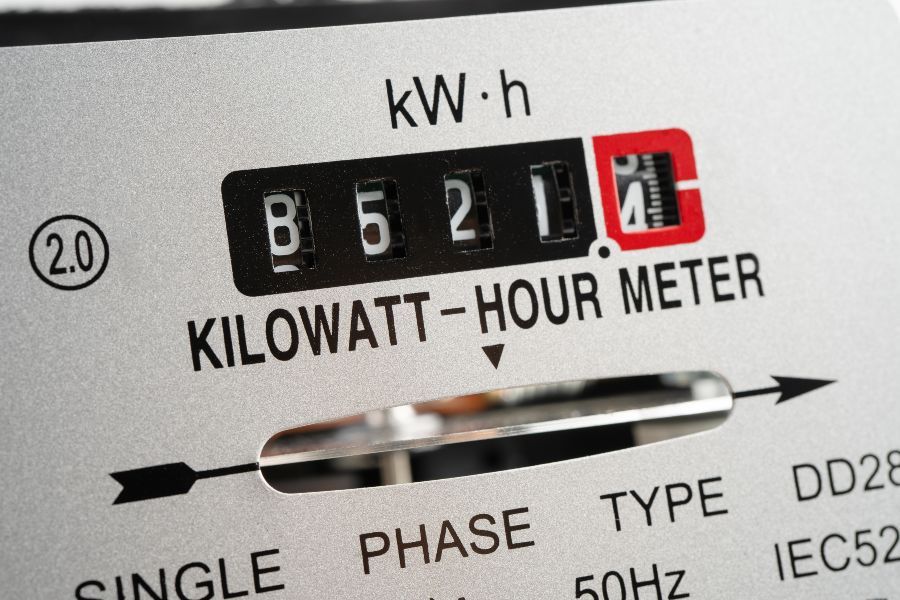
Confusion between kW and kWh is one of the main reasons people misestimate running costs.
- kW (kilowatts) is a measure of power (how fast electricity is being used at a moment).
- kWh (kilowatt-hours) is energy over time (what you are billed for). Your bill’s usage is measured in kWh.
A useful mental model: if an appliance draws 1 kW for one hour, it uses 1 kWh.
Where to find the numbers
Australia’s Zoned Energy Rating Label includes estimated annual energy use (kWh) for heating and cooling, shown for the hot/average/cold climate zones. This is valuable for comparisons, but you should treat it as “standardised testing guidance,” not a promise of your exact bill.
For a running-cost estimate, you will typically look for:
- Rated input power/power consumption (kW)
- Sometimes a range (minimum–rated–maximum), particularly for variable output systems
The Australian Government’s energy guidance also uses the same logic you used in the previous sections: multiply input power (kW) by your electricity price ($/kWh) to estimate the hourly running cost.
Cooling capacity vs power input: the misconception to avoid
A common marketing shorthand is “a 5 kW system,” which refers to output capacity, not what it draws from the wall. The label and specs help separate these concepts by reporting performance and estimated energy use distinctly.
Practically:
- Capacity tells you whether the system is sized for the room or the whole area.
- Input power tells you what you pay for, in combination with your tariff.
This is why correctly sizing matters: an underpowered unit may run hard for long periods; an oversized unit may short-cycle in some homes. Either outcome can push energy bills up.
Energy efficiency, inverter behaviour, and what changes in real life
Many modern systems vary output rather than operating strictly “on/off.” That often means higher draw early (pull-down) and lower draw once the room stabilises; one reason your hourly cost estimate is best treated as a planning baseline, not a fixed number.
When you combine accurate tariff awareness, climate-zone-aware performance information, and the correct interpretation of kW vs kWh, you can predict running costs far more reliably and make more confident decisions about operating habits, maintenance, and (later) comparing standard air conditioners, reverse-cycle options, and portable units.
How Much Does It Cost to Run a Split System Air Conditioner
For most Australian homes, split system air conditioners are the most straightforward to estimate because they typically serve a defined area (one room or one open-plan zone). Your running cost still comes back to input power (kW) × tariff ($/kWh) × hours, but the load is strongly shaped by room size, sun exposure, and whether you keep the conditioned space contained.
A helpful mindset: treat “split system running cost” as a function of (1) the size air conditioner you installed, and (2) how hard it has to work to maintain your chosen setpoint.
Bedroom split system running cost (small room)
A bedroom scenario is often the “best case” for lower running costs because you can keep doors closed and stabilise the temperature quickly.
Assumptions to state (so the reader can swap in their own):
- Room is a single closed space (door closed most of the time)
- Average insulation and window coverings
- Target temperature in a sensible comfort band (not extreme)
- A known tariff (single-rate or time-of-use)
Example calculation (template, not a promise):
If your unit typically draws X kW while maintaining temperature and your tariff during those hours is $Y/kWh, then cost per hour = X × Y. Multiply by your nightly hours to get a nightly total, and by days used in the month to get a monthly estimate.
Two levers usually matter most here:
- Setpoint and fan use: Sustainability Victoria recommends setting the thermostat around 24°C to 26°C for living areas in summer and notes that each degree lower can increase running costs (their guidance cites ~10% per degree).
- Clean airflow: clogged air conditioner filters increase resistance and can reduce performance; building a habit to service or clean filters helps avoid unnecessary power draw (detailed maintenance is covered later, but filter condition is a high-frequency issue).
Living room split system running cost (medium–large room)
Living areas can cost more per hour because the load is rarely “steady”:
- open-plan layouts increase the volume being cooled
- higher occupancy adds heat
- kitchens and other appliances (including kitchen appliances) add heat during cooking
- afternoon sun and large glazing can create a sustained heat gain
This is where “it worked fine in the bedroom” stops being a reliable reference point. If you estimate using a single “rated” input power, treat it as conservative for hot afternoons; many systems ramp up initially and then settle once the space stabilises.
If your living space is difficult (sunny, open, high ceilings), prioritise strategies that reduce the load before you ask the air con to fight it: close blinds early, shut off unused adjoining rooms, and use fans to improve perceived comfort. Sealing gaps and using curtains/shading reduces overall heating and cooling loads.
Multi-split vs multiple single splits
The running-cost comparison here is rarely about a simple “multi-split is cheaper” claim. It depends on how you use it:
- If you regularly cool multiple rooms at the same time, a multi-split may be operationally convenient and can be efficient when matched well to demand.
- If you usually cool one room at a time, separate single splits can allow tighter targeting (only one indoor unit runs), which can mean less energy in practice.
The most important principle is control: cooling only the rooms you occupy tends to reduce consumption. It is recommended to minimise the area cooled (closing doors, switching off unused indoor units, and zoning where available).
Common split system mistakes that increase running costs
These show up repeatedly in Australian households:
- Mis-sizing: too small runs hard for long periods; too large can cycle inefficiently in some conditions (and comfort can suffer)
- Poor placement or blocked airflow around indoor vents
- Neglecting to clean filters (reduced airflow and performance)
- Neglecting the outdoor unit (restricted airflow around the condenser, debris, or poor clearance)
Note: air conditioning installation costs are separate from running costs, but installation quality affects running costs over the system’s life. A poorly commissioned system can be “expensive to run” even if it was cheap to install.
Need a Safer, Modern Switchboard? We Can Upgrade It
Concerned about an outdated or overloaded electrical setup? Explore our electrical switchboard upgrade service and speak with our team about a compliant, future-ready solution for your Sydney property. Call today – 0480 808 422.
How Much Does A Ducted Air Conditioner Cost to Run
Ducted systems often have higher potential running costs because they can condition a much larger area, sometimes the entire house. However, ducted systems can also be cost-effective when zoning is used properly.
Ducted running cost per hour vs per day
For ducted, your “per hour” estimate should reflect how many zones are open. The difference between “all zones on” and “living zones only” can be the difference between a manageable bill and an unpleasant surprise.
Sustainability Victoria advises that, if your ducted system can be zoned, shutting off some cooling zones reduces the area cooled (with the practical note to maintain a pathway for air to return to the return grille).
Zoning and thermostat strategy to cut the ducted running cost
A simple strategy that usually works:
- afternoon/evening: prioritise living zones
- overnight: prioritise sleep zones
- avoid conditioning empty rooms “just in case”
If your tariff has peak periods, zoning becomes even more valuable: you can reduce demand when electricity is most expensive without sacrificing comfort everywhere at once.
Duct leakage and insulation losses
Ducted systems run through roof spaces or subfloors, where losses can be significant if ductwork is poorly insulated or leaky. Australia’s National Construction Code includes requirements for ductwork insulation and sealing in the energy-efficiency provisions, underscoring the importance of duct performance to overall efficiency.
Practical takeaway: “good commissioning” for ducted is not just thermostat setup; it includes airflow balance, sealing, and ensuring duct insulation is appropriate for the installation environment.
How Much Does It Cost to Run Reverse Cycle Air Conditioning
Reverse-cycle systems are the same equipment operating in heating or cooling only mode. In heating mode, the unit moves warm air into the home; cost depends on outdoor temperature, the required indoor setpoint, and how well the home retains heat. Australia’s zoned label framework provides separate estimates for heating and cooling energy use across climate zones, reinforcing that mode and climate matter.
How Much Does It Cost to Run Portable Air Conditioning
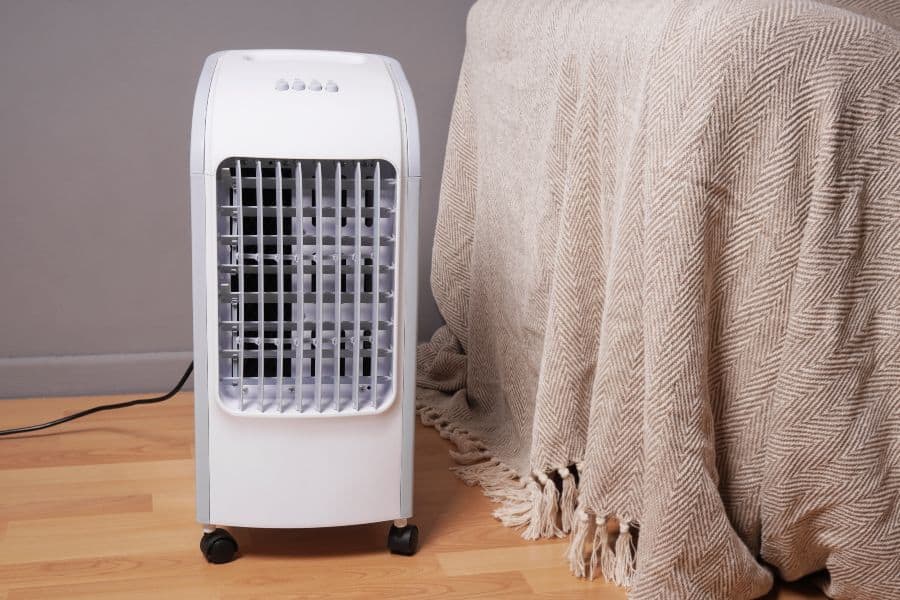
Portable units can be convenient for rentals or occasional use, but they are often less efficient in practice, especially when sealing is poor.
CHOICE publishes comparative running-cost analysis for portable air conditioners vs split-system units (based on seasonal usage assumptions), which is a useful benchmark when readers are weighing “portable now” versus “install a split later.”
How Much Does Air Conditioning Cost to Run Per Day and Per Month
Once you trust your hourly estimate, conversion is simple:
- Daily cost = hourly cost × hours/day
- Monthly cost = daily cost × days used
Two example schedules Australians actually recognise:
- Evening-only: 4-6 hours after work, higher chance of peak pricing, especially on hot days.
- Heatwave week: longer daily run-times; consider pre-cooling earlier if you have rooftop solar panels or cheaper daytime rates.
To keep your estimate honest, record your inputs:
- tariff(s) for the hours you run it
- typical kW draw (from specs or a conservative assumption)
- hours/day and days/month
- rooms/zones cooled and basic home factors (shading, draughts, insulation)
How Much Does Air Conditioning Cost on Solar
With rooftop solar, the key question is whether the electricity is self-consumed (used in the home) or exported. Solar savings depend on this split and whether batteries can shift more solar into evening use.
If you run the air conditioner during strong solar generation, you may avoid buying electricity from the grid, but you also forgo the feed-in credit you would have earned by exporting (an opportunity cost).
Practical playbook:
- Cool earlier (or pre-cool) when solar output is high.
- “Coast” later with blinds down, doors closed to the cooled zone, and fan support.
How Much Does Air Conditioning Cost on Time-of-Use Tariffs
On time-of-use (ToU) plans, the $/kWh changes by time band. Peak pricing aims to reduce demand in the late afternoon/evening.
How to apply this quickly:
- Check your plan document for the exact times (they vary by retailer/network and can be seasonal).
- On your bill, rates usually appear as separate usage lines by time band.
- Shift cooling load: pre-cool before peak, where feasible, then ease back during peak using shading and fans. Blinds, draught-proofing, and fans are practical cooling-cost reducers.
How Save Costs By Running Air Conditioning Efficiently
The highest-return actions reduce the cooling load and preserve airflow.
Setpoint + fan strategy
It is recommended to set summer thermostats to 24°C–26°C; each degree lower can increase running costs (their guidance cites ~10% per degree). Each degree higher can reduce cooling costs and suggests using a fan first, where possible.
Maintenance to reduce running costs
Dirty filters are a common, avoidable cause of higher consumption. The Australian Government’s Energy Rating guidance states that clogged filters reduce airflow and energy efficiency, and that air conditioning cleaning or replacing filters can lower energy consumption.
If you use an air conditioner regularly, treat filter checks as routine during the summer period.
Seal and shade
Close blinds early, block direct sun, and seal obvious draughts. These steps reduce how much heat enters the home, so the air con does less work.
How Much Does A Running Air Conditioning Cost Compared With Fans and Other Cooling Options
Fans are often the cheapest “first step” because they improve perceived comfort without actively cooling the air. Fans are cheap to run (around 2 cents per hour) and can help you raise the thermostat setting.
Use this as a control lever: the goal is not “fans instead of air con,” but “fans so you need less air con.”
How Much Does It Cost to Run Air Conditioning Overnight
Overnight running becomes expensive when the system is pushed to hold an aggressive setpoint for many hours. A cost-controlled overnight setup is typically:
- a slightly higher setpoint than your evening setting
- sleep mode or a timer (if available)
- a closed bedroom and fan assistance to maintain comfort
How Much Does It Cost to Run Air Conditioning During a Heatwave
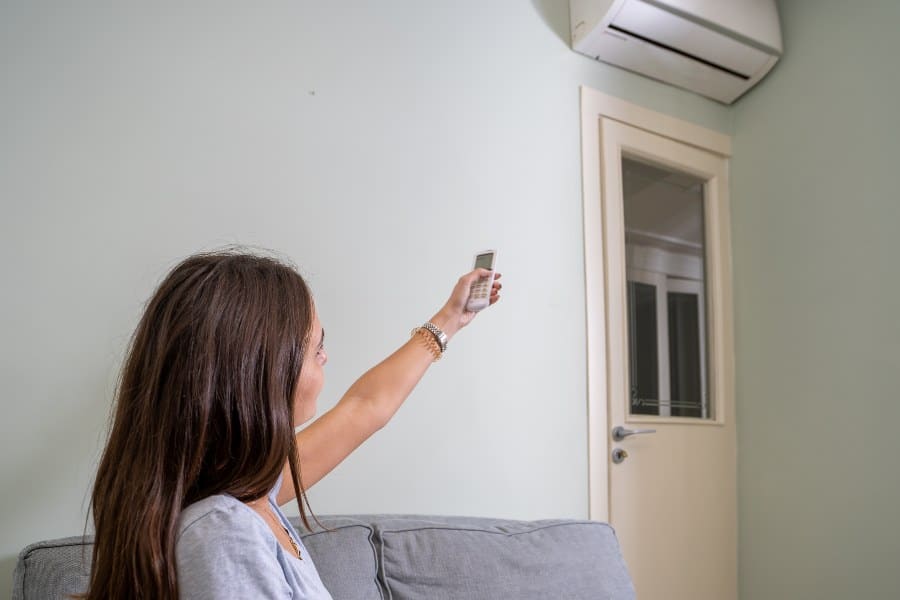
In heatwaves, health comes first. NSW Health advises people to keep cool and hydrated and highlights higher-risk groups (older people, babies and young children, pregnant people, those with chronic illness, and socially isolated people).
Better Health Channel’s extreme heat fact sheet similarly recommends staying cool, using air conditioning and/or fans, and checking on vulnerable people.
A “bill shock” plan that stays safety-led:
- Pre-cool earlier if possible, then prioritise the coolest room(s) later.
- Block the sun early and reduce indoor heat sources.
- If home cooling is inadequate, consider time in air-conditioned public spaces (library, shopping centre, community centre).
Need Commercial Air Conditioning Support in Sydney? We’ve Got You Covered
Keeping your workplace comfortable and compliant is critical. See our commercial air conditioning service sydney offering for servicing, maintenance, and solutions built for business sites across Sydney. Call us today – 0480 808 422.
2026 Air Conditioning Costs Takeaways for Australians
In Australia, air conditioning costs to run is not a single “average” number, it depends on your unit’s input power (kW), your electricity tariff ($/kWh) (including peak/shoulder/off-peak if you’re on time-of-use), and your usage patterns (hours, target temperature, doors closed, and how much of the home you cool). The most reliable baseline is:
Hourly cost ($/hr) = input power (kW) × tariff ($/kWh)
Then scale it: daily cost = hourly × hours/day, and monthly cost = daily × days used.
Costs vary widely across air conditioning systems because the type of air conditioner (split vs ducted vs portable), system size, room size, insulation, shading, and climate all change how hard the system must work. Avoid the common mistake of using “cooling capacity” (e.g., “5 kW system”) as the cost number; what matters for running cost is the power input from the specs/manual.
To keep bills predictable, cool only the rooms you use (doors/zoning), run moderate setpoints with fan support, and maintain airflow; if you use an air conditioner regularly, clean filters routinely. On solar or ToU plans, shifting cooling earlier and “coasting” later can reduce peak-priced usage.


